
In traditional SEO, metrics like click-through rate (CTR), keyword rankings, and organic traffic were the holy grail. They told you how visible you were, how often people visited your site, and how well you ranked on Google’s results pages.
But in the world of Google AI Mode, those metrics no longer tell the full story, and in some cases, they don’t even matter.
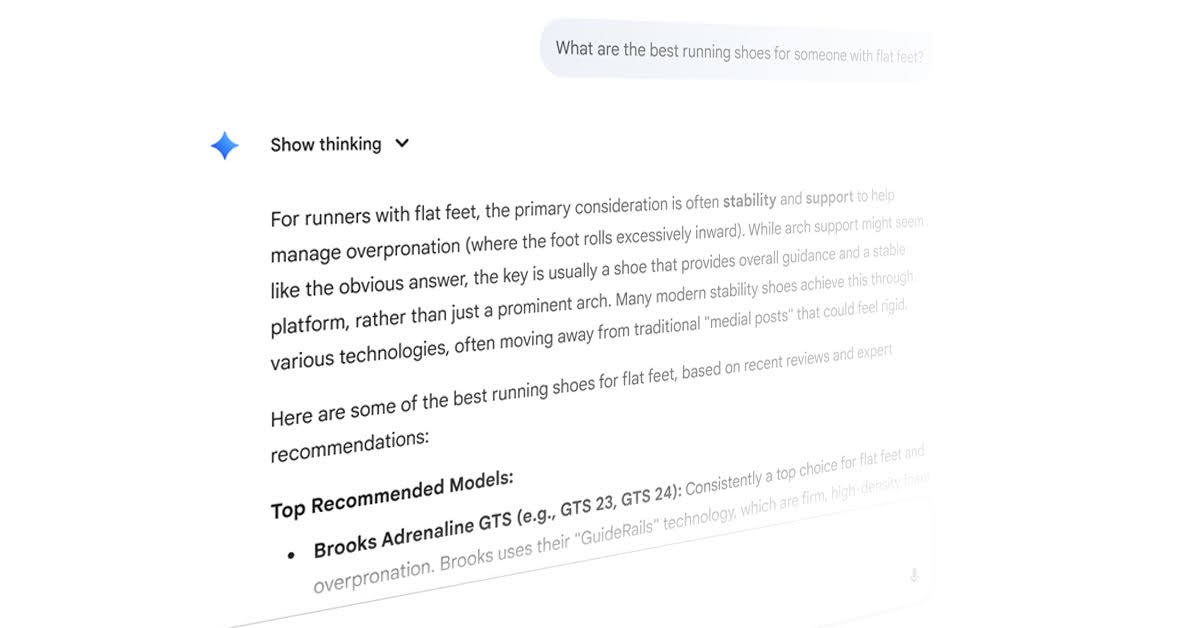
AI-powered search is changing not just how users interact with search results, but whether they click at all. Instead of directing people to your site, AI may answer their query within the search interface, using information pulled from your content, without giving you a click in return.
So how do you measure success in an environment where traditional visibility doesn’t guarantee visits?
Let’s explore the new SEO metrics that matter in the AI era, and how to track them.
The Problem with Old SEO Metrics
Clicks & Impressions Don’t Reflect AI Visibility
Google’s Search Console (GSC) still measures clicks and impressions based on traditional SERPs. But AI Mode introduces a new reality:
- Many answers are shown without links.
- Some citations are attributed in small text, without driving traffic.
- AI Mode summaries can include data from your site, without users ever visiting it.
This leads to the paradox of high value, low visibility: You could be quoted by Gemini as the best source in your niche and never see a spike in traffic.
Welcome to the Zero-Click Era
AI Mode encourages zero-click behaviour. This means:
- Users get answers inside the search interface.
- They complete tasks (bookings, comparisons, summaries) without leaving Google.
- Even e-commerce purchases are moving toward agentic flows that skip retailer websites.
This doesn’t mean your content has no value. It means your KPIs must evolve.
New Metrics for AI-Driven SEO
1. Citation Footprint
Track how often your brand, product, or content is cited or mentioned in AI-generated responses, even when there’s no click.
How to track it:
- Manual prompt testing in AI Mode or SGE.
- Use tools like Perplexity, ChatGPT (browsing), You.com to test entity inclusion
- Monitor branded mentions across third-party platforms.
2. Entity Visibility
In AI Mode, entities (not just pages) drive citations. You need to know whether your:
- Brand
- Product
- Author
- Service category
…is recognised by Google’s AI models as a reputable source.
Tools to help:
- Google’s Knowledge Graph API
- WikiData + Schema markup tracking
3. AI Answer Inclusion Testing
This involves prompting the AI with realistic queries and checking:
- Are you mentioned?
- Are your competitors featured instead?
- What types of content or pages are being summarised?
Keep a log of prompts and outputs to measure your AI visibility baseline.
4. Content Reuse in AI Summaries
Measure how often your content is repurposed, rephrased, or summarised by the AI in:
- Google AI Mode answers.
- Bing Copilot responses.
- AI-based discovery engines (Perplexity, Arc, etc.)
If you’re creating original research, comparisons, or thought leadership, your insights are more likely to be cited.
5. Post-Click Value (For the Traffic You Do Get)
As total traffic drops, engagement becomes everything.
Track:
- Time on page.
- Scroll depth.
- Task completions.
- Micro-conversions (downloads, tool use, video plays).
When users do click through, your goal is to deliver value that AI can’t replicate, like depth, interactivity, and personalisation.
Redefining Success in the AI Era
Your SEO success in AI Mode won’t always show up as a spike in traffic, but it might look like:
- Being recommended in a Gemini answer.
- Having your product appear in an AI comparison table.
- Being cited in a zero-click summary that influences a buying decision.
- Becoming the trusted voice behind the AI’s response.
How to Report AI-First SEO to Stakeholders?
Understand the shift in the mindset: “We’re not just trying to get ranked. We’re trying to become the answer the AI trusts, references, and recommends, whether there’s a click or not.”
An AEO tracking report must include:
- Traditional KPIs (CTR, traffic, conversions).
- Emerging AI visibility signals and AI mentions.
- Geo-specific AI visibility.
- AI citations and domain analysis.
- Brand authority and citation patterns (including branded search demand trends).
- Trusted source citation audits.
- Real engagement metrics that show what happens after the click.
- AI share of voice reports.
Final Thoughts
AI Mode is changing what it means to “show up” in search. Your goal isn’t just clicks. It’s influence without a click.
To win in this landscape, track what the AI sees, what it says, and whether you’re part of its thinking. In this new world, you’re either visible to the algorithm… or invisible to the user.
Coming Next:
Blog 6: The AI-Ready Marketing Playbook — 6 Steps to Adapt and Win
Also read:
Blog 1: Why Google’s AI Mode Changes Everything?
Blog 2: Inside Google Gemini — The AI Brain Behind the Future of Search
Blog 3: Query Fan-Out Explained — How Google Breaks Down Complex Questions
Blog 4: From Keywords to Conversations — SEO Strategies for AI-Driven Search